Christmas Eve Dinner Ideas: 15 Traditional Menus Families Keep (2026)
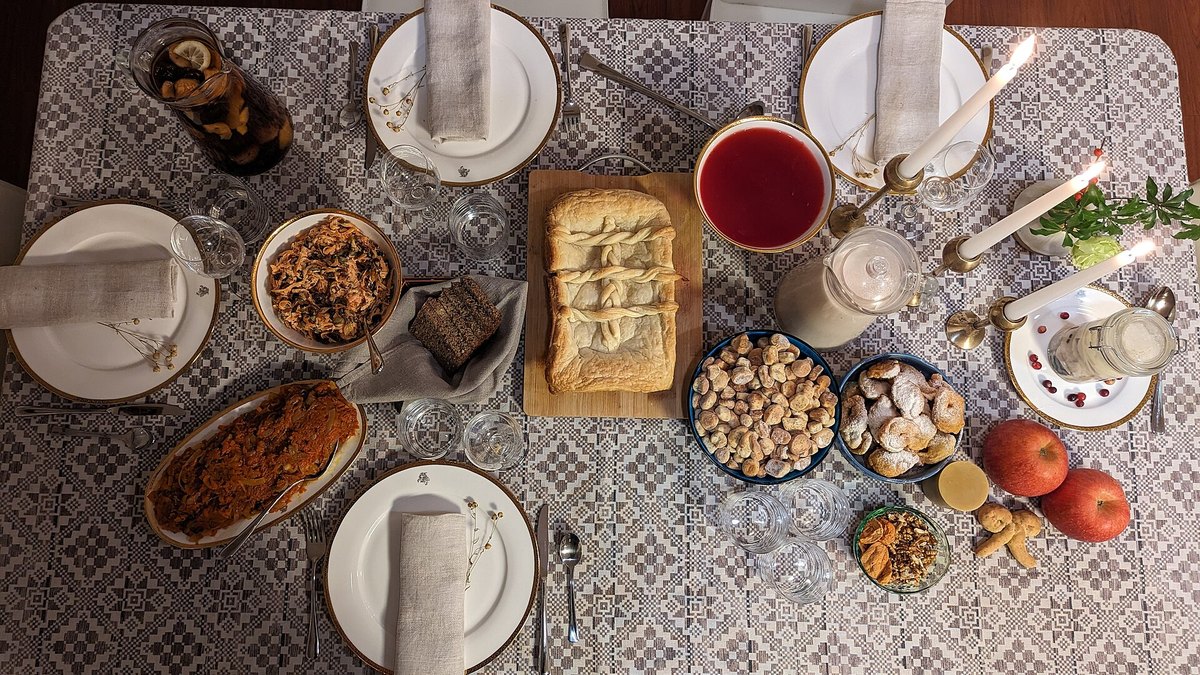
Christmas Eve dinner is the meal families argue about least and remember most: the fish your grandmother fried every year, the pierogi everyone helped pinch, the soup after the candlelight service. Here are 15 Christmas Eve dinner menus families have kept for generations, the easy ones for after church, what the twelve dishes are, a timeline for the day, and how to save the family recipe while the cook is still at the stove.
Quick answer
The most common Christmas Eve dinners in American families:
- The Feast of the Seven Fishes (Italian-American): baccalà, fried smelts, calamari, shrimp, clams.
- Wigilia (Polish): twelve meatless dishes, including barszcz, pierogi and carp, after the first star.
- Nochebuena (Mexican, Cuban, Puerto Rican): tamales and bacalao, or a whole roast pig.
- The julbord (Swedish and Scandinavian-American): herring, ham, meatballs, rice pudding with an almond.
- Oyster stew (Southern), often with crackers and a simple supper.
- Ham and potatoes after church, made ahead and served at 6.
- Soup and bread, chili or chowder, so nobody spends the night in the kitchen.
- An appetizer supper: a table of finger food and no main course at all.
Many of these are meatless because Christmas Eve was a fasting day before the feast. The menus below explain each one and what goes on the table.
About this guide
The menus come from the customs of the countries most American families trace their Christmas Eve to, checked against Wikipedia’s articles on Wigilia, the Feast of the Seven Fishes, Kūčios, Christmas Eve, the smorgasbord, risalamande, lutefisk and oyster stew in November 2026, plus the American suppers that turn up again and again when families describe their own Christmas Eves. These are menus, not recipes: what goes on the table and why. For the recipe itself, the best source is usually the oldest cook in your family, and the last section is about getting it from them.
Why so many Christmas Eve dinners are meatless
In the Catholic and Orthodox calendars, Christmas Eve was a vigil: a day of fasting and abstinence before the feast of Christmas. That is why so many of the oldest Christmas Eve menus are built around fish. Polish Wigilia excludes meat, and the supper traditionally has twelve dishes in memory of the twelve Apostles. Lithuanian families say a Kūčios with meat on the table is no longer Kūčios, just an ordinary dinner. Italian-American families made a feast out of the rule with seven kinds of fish.
The rule doesn’t bind most families any more, but the menus stayed, because by then they had become the taste of Christmas Eve.
15 Christmas Eve dinner menus
1. The Feast of the Seven Fishes (Italian-American)
The Feast of the Seven Fishes is an Italian-American Christmas Eve dinner. It came with the Italian families who settled in the cities of the Northeast and Upper Midwest between the 1880s and the 1930s. In Italy it’s just La Vigilia.
- Baccalà (salt cod), soaked for days, then fried or made into a salad with olives and lemon
- Fried smelts
- Fried calamari
- Shrimp, scampi-style or in a cocktail
- Linguine with clam sauce
- Baked or stuffed clams, or mussels
- Octopus or seafood salad
- Dessert: panettone, struffoli (honey balls), cannoli
Nobody agrees on why it’s seven. It may be the seven sacraments or the seven hills of Rome, and plenty of families make nine, eleven or thirteen dishes, or don’t count at all.
2. Wigilia, the Polish twelve dishes
Wigilia starts when the first star appears in the sky. The family says grace, reads the Christmas story from Luke 2, and breaks the opłatek, a thin Christmas wafer, wishing each other well for the year. Some families put a handful of hay under the tablecloth for the manger and set an extra place for an unexpected guest.
A Wigilia table of twelve meatless dishes might be:
- Barszcz (clear beet soup) with uszka, little mushroom dumplings
- Mushroom soup
- Pierogi with potato and cheese
- Pierogi with sauerkraut and mushrooms
- Fried carp
- Herring in oil or cream
- Gołąbki (cabbage rolls) with mushrooms and rice
- Cabbage with mushrooms or peas
- Kluski with poppy seed
- Kutia (wheat or barley with poppy seed, honey and nuts)
- Makowiec, poppy seed cake
- Kompot of dried fruit
Many families go to midnight Mass afterward, called Pasterka, the Shepherds’ Mass.
3. The Ukrainian Holy Supper (Sviata Vecheria)
Ukrainian families also serve twelve meatless dishes and wait for the first star. The two that are always there are kutia, wheat with poppy seed and honey, which starts the meal, and uzvar, a drink of stewed dried fruit. The rest are often borscht, varenyky (dumplings with potato or sauerkraut), holubtsi (cabbage rolls) with rice or buckwheat, fish, mushrooms and beans. Families that keep the old church calendar hold it on January 6.
4. Lithuanian Kūčios
Kūčios is a meatless and, traditionally, dairy-free supper of twelve dishes. Expect several kinds of herring with different sauces, boiled potatoes, sauerkraut cooked without meat, mushrooms, cranberry kissel (a thick fruit pudding), and kūčiukai, small hard biscuits served with poppy seed “milk”. Lithuanians say it’s the one dinner of the year where a meat dish would spoil it.
5. Mexican Nochebuena
Mexican families eat late on Christmas Eve, before or after the Misa de Gallo (midnight Mass), and often after the last night of Las Posadas.
- Tamales, usually made in a batch by the whole family the day before
- Bacalao a la vizcaína, salt cod with tomatoes, olives and peppers
- Romeritos, a green in mole with shrimp patties
- Pozole for a crowd
- Dessert: buñuelos with syrup
- To drink: ponche, a hot punch of seasonal fruit, brown cane sugar (piloncillo) and cinnamon
6. Cuban Nochebuena
In Cuba and in Cuban-American families, Christmas Eve is built around a whole roast pig (lechón asado). In Miami, many families roast it in a caja china, a large wooden box with the coals on top.
- Lechón asado, marinated in sour orange and garlic
- Black beans and white rice, or moros y cristianos
- Yuca with mojo
- Fried plantains
7. Puerto Rican Christmas Eve
Puerto Rican families serve pernil (roast pork shoulder) or a whole lechón, arroz con gandules (rice with pigeon peas), pasteles (a root-vegetable tamale with a meat filling, wrapped in a plantain leaf), morcilla, marinated green bananas and a Puerto Rican potato salad. Dessert is arroz con dulce (coconut rice pudding), tembleque (coconut pudding), flan and turrón, and the drink is coquito, a coconut eggnog.
8. Filipino Noche Buena
Filipino families eat Noche Buena at midnight, after the late Mass called Misa de Gallo, which ends the nine dawn Masses of Simbang Gabi.
- A sweet glazed ham (hamonado) or a holiday ham
- Queso de bola, a whole ball of Edam
- Pancit noodles
- Filipino spaghetti, the sweet one with hot dogs
- Lumpia
- Embutido or chicken galantina
- A whole lechón for a big family
9. The Swedish julbord
In Sweden, Christmas Eve is the main day, and dinner is the julbord, a buffet eaten in rounds with a clean plate each time:
- Pickled herring, several kinds, with sour cream and chives
- Salmon and other cold fish
- Cold cuts, above all the Christmas ham with mustard
- Warm dishes: Swedish meatballs, small sausages (prinskorv), and Jansson’s Temptation, a potato and anchovy casserole
- Lutfisk in some families, with white sauce and peas
- Rice pudding with cinnamon, with one almond hidden in it. Whoever finds it gets a small prize.
One old custom is dopp i grytan: dipping bread in the broth the ham was cooked in.
10. Norwegian- and Danish-American Christmas Eve
In Norwegian-American families in Minnesota and Wisconsin, Christmas Eve can mean lutefisk: dried cod cured in lye, served with melted butter or cream sauce, boiled potatoes and peas. It is famous for dividing families into people who love it and people who tell jokes about it.
Danish families end Christmas Eve dinner with risalamande, rice pudding folded with whipped cream, vanilla and chopped almonds, with one whole almond hidden in the bowl. The finder wins a small prize, often a marzipan pig.
11. German and Czech: sausages, carp and potato salad
In many German families, Christmas Eve supper is deliberately simple: sausages and potato salad, eaten before or after church and the opening of presents, with the roast goose saved for Christmas Day. German polls regularly name it the country’s favorite Christmas Eve meal. Czech families keep a similar supper of fried or baked carp with potato salad. It’s a good model for any family that wants the evening for something other than cooking.
12. Southern oyster stew
In many Southern families, Christmas Eve means oyster stew: oysters warmed in milk or cream with butter, salt and pepper, served with oyster crackers. One explanation for the custom is that Irish Catholic immigrants, who didn’t eat meat on Christmas Eve, were used to a stew of dried ling fish, and oysters were the nearest thing in America. Serve it with a simple salad and Christmas cookies.
13. Ham and potatoes after church
The classic American Christmas Eve after a candlelight service:
- A spiral-cut ham, warmed while you’re at church
- Scalloped or cheesy potatoes, assembled the day before
- Green beans or a salad
- Dinner rolls, ideally the family recipe
- Christmas cookies and coffee
Everything goes in the oven before you leave and is ready when you come home.
14. Soup and bread
A pot of soup leaves the cook free on Christmas Eve:
- Chili with cornbread and toppings
- Clam chowder or corn chowder with crusty bread
- Potato soup with bacon and cheese
- Beef stew in the crockpot
- Minestrone and a loaf of garlic bread
Families who go to a late service often keep the soup on low and eat when they get home.
15. The appetizer supper
No main course at all, just a table everyone grazes from all evening. It’s the 1960s Christmas party spread, and grandkids love it:
- A cheese ball with crackers
- Shrimp cocktail
- Deviled eggs
- Swedish meatballs in the crockpot
- Pigs in a blanket
- A relish tray: olives, pickles, celery, carrots
- Spinach dip in a bread bowl
- Fudge, cookies and a punch bowl
Easy Christmas Eve dinner ideas
If you want Christmas Eve to be easy, choose something that can be made ahead or cooks itself:
- Spiral ham with make-ahead potatoes
- Lasagna assembled the day before
- Baked ziti for a crowd
- A pot of chili with cornbread
- Clam chowder with oyster crackers
- Crockpot Swedish meatballs over egg noodles
- Sheet-pan sausages, potatoes and peppers
- A roast chicken with root vegetables
- Beef stew in the slow cooker
- Shrimp and grits
- Tamales bought from a local maker, with beans and rice
- Pierogi from the freezer, fried with onions
- Breakfast for dinner: quiche, sausage, cinnamon rolls
- A charcuterie board and a salad
- Homemade pizza night with the grandkids
- French onion soup and a big salad
- Enchiladas made the day before
- A pot of gumbo
- Baked salmon with rice and green beans
- Takeout from the family’s favorite place, on the good plates
What are the 12 dishes for Christmas Eve?
The tradition of twelve dishes belongs to Poland, Ukraine, Lithuania and their neighbors. The twelve are for the twelve Apostles, all are meatless, and the meal begins when the first star appears. The exact list differs by family and region. The Polish list above is a typical one. Ukrainian families always start with kutia; Lithuanian families always have herring and kūčiukai with poppy seed milk. If you’re starting the tradition, count soups, pierogi fillings and desserts separately, and you’ll reach twelve sooner than you think.
Christmas Eve dinner for two, and for a crowd
For two: shrimp scampi and linguine, a small roast chicken, or the oyster stew, with a good bottle and candles. Couples whose children have their own Christmas Eves often find a quiet dinner for two becomes a tradition of its own.
For a crowd: choose dishes that serve themselves and wait well: a ham, a tray of lasagna, a pot of chili, a julbord-style buffet, or tamales. Ask each family to bring one dish that’s “theirs” every year.
A Christmas Eve dinner timeline
For a family going to a 4 p.m. Christmas Eve service:
| When | What to do |
|---|---|
| December 22-23 | Shop, make the dessert and cookies, assemble casseroles and lasagna |
| December 24, morning | Set the table, chill the drinks, make the salad dressing |
| 2:30 p.m. | Ham or casserole in a low oven; soup on low |
| 3:30 p.m. | Leave for church |
| 5:15 p.m. | Home. Raise the oven, warm the rolls, toss the salad |
| 5:45 p.m. | Grace, light the candles, eat |
| 7:00 p.m. | Dessert, the reading, one present for the kids |
If you’re going to midnight Mass, flip it: dinner at 5 or 6, then a small plate of cookies and something warm when you get home.
Save the recipe while the cook is still at the stove
Most families have one Christmas Eve dish that only one person really knows how to make. Before it’s lost, cook it with them this year and write down what they actually do, not just what’s on the card:
- How long do you really fry it? How do you know it’s ready?
- What do you add “until it looks right”? How much is a handful?
- Where did this recipe come from? Who made it before you?
- What did Christmas Eve look like in the house you grew up in?
- Who sat where at the table? Who always came late?
- What’s the one Christmas Eve you’ll never forget?
Write the answers on the back of the recipe card. The grandchildren will care as much about those as about the measurements. There are more ideas for the evening itself in Christmas Eve traditions and for the whole season in family Christmas traditions.
After dinner
Many families have a fixed order for the rest of the night: the reading, a game, one present, bed. For the reading, there’s the full text of ‘Twas the Night Before Christmas, with tips for reading it to the grandkids. For a grace before the meal, there are short ones in Christmas prayers, and for the hour after dinner, 60 Christmas games for the family.
Frequently asked questions
What is a traditional Christmas Eve dinner?
It depends on where the family came from. Italian-American families serve the Feast of the Seven Fishes, Polish families a meatless Wigilia supper of twelve dishes, Mexican families tamales and bacalao, Cuban families a roast pig for Nochebuena, Swedish families the julbord buffet, and many Southern families oyster stew. In a lot of American homes the tradition is simpler: ham, soup or appetizers after a Christmas Eve service, with the big meal saved for Christmas Day.
What are the 12 dishes for Christmas Eve?
Polish, Ukrainian and Lithuanian families serve twelve meatless dishes on Christmas Eve, one for each of the twelve Apostles. A Polish Wigilia might be barszcz with uszka, mushroom soup, pierogi, fried carp, herring, cabbage rolls with mushrooms, kluski with poppy seed, kutia, poppy seed cake and a dried fruit compote. The exact twelve differ from family to family, and what matters is that there are twelve and none of them has meat.
Why do some families not eat meat on Christmas Eve?
Christmas Eve was a vigil, a day of fasting and abstinence before the feast, so Catholic and Orthodox families from Italy, Poland, Lithuania, Ukraine and elsewhere ate fish instead of meat. That is where the Feast of the Seven Fishes, the Polish carp and the Lithuanian herring dishes come from. Many families keep the meatless supper long after the rule stopped applying to them.
What is the Feast of the Seven Fishes?
An Italian-American Christmas Eve dinner of fish and seafood dishes, such as baccalà (salt cod), fried smelts, calamari, shrimp, clams and mussels. It came with the Italian immigrants who settled in the cities of the Northeast and Upper Midwest from the 1880s to the 1930s. In Italy it’s simply La Vigilia, and many Italian-American families don’t count the dishes at all.
What do Mexicans eat on Christmas Eve?
Nochebuena dinner in Mexico usually includes tamales, bacalao a la vizcaína (salt cod stewed with tomatoes, olives and peppers), romeritos, pozole, buñuelos and a hot fruit punch called ponche. The family often eats late, before or after the midnight Mass called the Misa de Gallo.
What is an easy Christmas Eve dinner?
Anything you can make ahead and heat up after church: a spiral ham with rolls and a make-ahead potato casserole, a pot of chili or clam chowder with bread, a lasagna assembled the day before, a crockpot of Swedish meatballs with appetizers, or a sheet pan of sausages and potatoes. Keep Christmas Eve simple and save the work for Christmas Day.
What time should Christmas Eve dinner be?
Most families plan around church. If you go to a 4 or 5 p.m. family service, eat at 6 or 7. If you go to midnight Mass, eat early, around 5, or have a light supper before and a second meal after, as Filipino families do with Noche Buena. Polish families traditionally wait for the first star to appear in the sky.
What is the Swedish Christmas Eve dinner called?
The julbord, the Christmas table: a buffet eaten in courses, starting with pickled herring, then salmon and other fish, then cold cuts with the Christmas ham and mustard, then warm dishes such as meatballs, small sausages and Jansson’s Temptation, and rice pudding for dessert with an almond hidden in it. Whoever finds the almond gets a small prize.
Why is oyster stew eaten on Christmas Eve?
Oyster stew is a Christmas Eve tradition in many Southern families. One explanation is that Irish Catholic immigrants, who didn’t eat meat on Christmas Eve, were used to a stew of dried ling fish at home, and oysters were the closest thing they could find in America.
What do Filipinos eat for Noche Buena?
Noche Buena is eaten at midnight, after the late Mass called Misa de Gallo. The table usually has ham (often a sweet glazed hamonado), a round of Edam called queso de bola, pancit noodles, Filipino spaghetti, lumpia and, for a big family, a whole roast lechón.
How do I make Christmas Eve dinner special without a lot of work?
Keep one thing the same every year, even if it’s simple: the same soup, the same dish of your grandmother’s, the same grace or the same reading. Set the table properly, light candles, and let the menu be easy. The repetition is what makes it a tradition.
How do I save a family Christmas Eve recipe before it’s lost?
Cook it with the person who makes it and write down what they actually do, not just the ingredients: how long they really fry it, how they know it’s ready, what they add “until it looks right”. Ask where the recipe came from and who made it before them, and write that on the card too. The story is usually what the grandchildren want most.
Keep the stories that come with the recipe
The dish is only half of what a family loses when the cook is gone. The other half is the story: the kitchen it was first made in, who taught them, the Christmas Eve the power went out.
Memoirji asks someone about their life one question at a time, in the browser, on WhatsApp or on LINE, and writes their spoken answers up as chapters they can keep and print. It’s free to start, and there’s nothing to download. Try it with a parent or grandparent over the holidays, starting with the recipe questions above, or use it yourself to get down the Christmas Eves you remember.